



Climate Change and Disaster Management Summit

Theme: Risk to Readiness: Building Climate-Smart and Disaster-Ready India

3-4 December 2025 | Hall No - MR 9

Overview

India stands at a climate inflection point. Ranked among the most climate-vulnerable countries globally, its population, ecosystems, and infrastructure are increasingly at risk from floods, cyclones, droughts, heatwaves, and forest degradation. At the same time, India is also at the forefront of global climate action—investing in sustainability, disaster resilience, and green growth as part of its commitment to a Viksit Bharat by 2047 and the UN 2030 Agenda.

The Government of India’s strategic shift from reactive disaster relief to proactive, data-informed climate resilience is supported by landmark efforts like the updated National Adaptation Plan (NAP) 2025, revised Disaster Management Act, LiFE Mission, Green Credit Program, and the National Geospatial Policy. These align closely with the Sendai Framework for Disaster Risk Reduction and India's net-zero and carbon sink targets under the Paris Agreement.

At the heart of this transformation is the fusion of geospatial intelligence, nature-based solutions, and decentralized governance. Space-based Earth observation, AI-driven risk models, and community mapping tools are enabling governments, industries, and citizens to plan, act, and adapt with speed and precision. GeoSmart India 2025’s Climate Change and Disaster Management Summit will convene national and global experts to discuss how India can strengthen climate governance, protect its forests and coasts, future-proof its cities, and mobilize finance and policy for a resilient tomorrow.

Program Agenda

Wednesday, 3rd December

0900 - 1100
Session 1: Vision 2047 - Resilient India through Climate-Integrated Policy

Session Highlight

This session sets the strategic direction. It will explore how India's climate ambitions-reflected in NAP 2025, National Disaster Management Plan, and Vision 2047-can be grounded in geospatial data, climate models, and multi-level governance.
Debarchan Powali

Presentation by

Debarchan Powali

Senior Research Analyst
Geospatial World
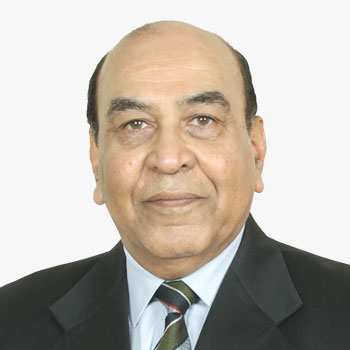
S A Hasnain, PVSM, UYSM, AVSM, SM, VSM*

Guest Address & Chair

Lt Gen S A Hasnain, PVSM, UYSM, AVSM, SM, VSM*

Member
National Disaster Management Authority
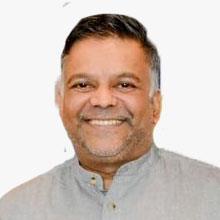
Madhav Pai

Keynote Address

Madhav Pai

CEO
WRI

C N Prabhu

Keynote Address

Dr C N Prabhu

Director
Bihar Mausam Sewa Kendra, Government of Bihar

Satish Kamat

Satish Kamat

President
Sri City Integrated Business City
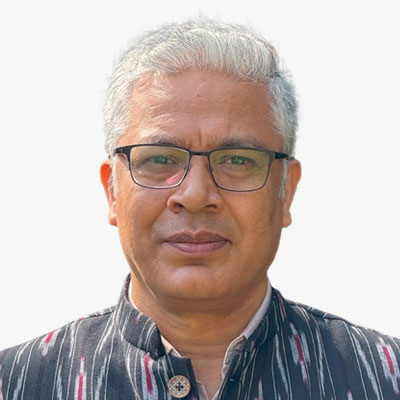
Kirtiman Awasthi

Kirtiman Awasthi

Senior Advisor & Team Leader - Climate Adaptation, Resilience & Climate Finance
Deutsche Gesellschaft fur Internationale Zusammenarbeit (GIZ) GmbH
Areendran Gopala

Areendran Gopala

Director Tech for Conservation (Remote Sensing & GIS)
World Wide Fund for Nature (WWF India)
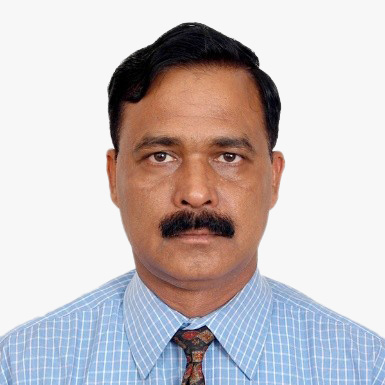
K. C. Tiwari

Dr (Col) K. C. Tiwari

Professor & National Geospatial Chair Professor - Multidisciplinary Centre for Geoinformatics
Delhi Technological University

Rajesh Shenoy

Rajesh Shenoy

Sector Head - AI and Digital Platforms
Center for Study of Science, Technology and Policy (CSTEP)
1100 - 1130
Tea & Coffee Break
1130 - 1300
Session 2: Disaster Management for a Multi-Hazard Nation

Session Highlight

With rising intensity of weather extremes, early warning systems must evolve. This session explores real-time geospatial and sensor-based solutions that can reduce casualties and economic losses.
S P Aggarwal

Moderator

Dr S P Aggarwal

Director
North Eastern Space Applications Centre (NESAC)

Rahul Saxena

Keynote Address

Rahul Saxena

Scientist G & Head Hydrometeorology
India Meteorological Department (IMD), MoES

Seema Joshi

Dr Seema Joshi

Vice President - Strategic Initiatives
Esri India

Manjit Singh

Dr Manjit Singh

Associate Professor
Central University of South Bihar (CUSB)

Akshay Loya

Akshay Loya

Chief Executive Officer
GISKernel

Garima Aggarwal

Dr Garima Aggarwal

Senior Consultant
National Institute of Disaster Management

Amit Sharma

Amit Sharma

Co-Founder and Director
Matrixgeo

1300 - 1500
Visit to Expo | Lunch
1500 - 1700
Session 3: Planning for Extremes - Smart Cities & Infrastructure

Session Highlight

Urban India faces the brunt of climate impacts. This session focuses on integrating geospatial tools into land-use planning, infrastructure design, and smart governance.
Umamaheshwaran Rajasekar

Moderator

Dr Umamaheshwaran Rajasekar

Urban Resilience Advisor
Coalition for Disaster Resilient Infrastructure (CDRI)

Mithun Anand

Mithun Anand

Co-Founder & Chief Technology Officer
Innpact Solutions

Rohit Magotra

Rohit Magotra

Deputy Director
Integrated Research & Action for Development (IRADe)

Sabin Thazhe Purayil

Dr Sabin Thazhe Purayil

Scientist F
Indian Institute of Tropical Meteorology (IITM)

Chelluri Srihari

Chelluri Srihari

Deputy Manager- Business Development
Shijay Projects India

Yetender Singh Negi

Yetender Singh Negi

Regional Sales Manager
IGIS Private Limited

Vamsi Krishna

Vamsi Krishna

Co-Founder & Chief Technology Officer
Aurassure

Thursday, 4th December

0930 - 1100
Session 4: From Maps to Action - Empowering Communities through collective action data for sustainable future

Session Highlight

This session grounds everything in grassroots realities. It highlights how geospatial tools, mobile platforms, and citizen science are empowering local resilience.
Pradip Kumar Parida

Moderator

Pradip Kumar Parida

Associate Professor in Public Policy
Jawaharlal Nehru University (JNU)

Ajay Kumar Naithani

Dr Ajay Kumar Naithani

Senior Scientist & HoD Engineering Geology Department
National Institute of Rock Mechanics

Pyush Dogra

Pyush Dogra

Senior Environmental Specialist
The World Bank

Richu Sanil

Richu Sanil

Senior Project Manager (Research & LME)
Foundation For Ecological Security (FES)

Deepak Kumar Raj

Dr Deepak Kumar Raj

Product Specialist (Research & Development)
SATPALDA

Ajeet Kanaujia

Ajeet Kanaujia

Field Application Engineer
FARO Technologies India

1100 - 1130
Tea & Coffee Break
1130 - 1300
Session 5: Climate Finance & ESG

Session Highlight

Resilience needs capital. This session explores financial tools to fund adaptation, from green bonds and carbon credits to insurance for disaster-prone regions.
Shubhashis Dey

Moderator

Shubhashis Dey

Senior Expert - Climate Finance
NITI Aayog

Deepak Madan

Deepak Madan

Corporate Risk Advisor, Insurance & Reinsurance Broker
Prudent Insurance Brokers Ind

Bhaskar Padigala

Bhaskar Padigala

Climate & Environment Advisor
British High Commission

Debal Mitra

Debal Mitra

Senior Program Manager
Climate Policy Initiative (CPI)

1300 - 1430
Lunch & Visit to Expo
1430 - 1600
Closing Plenary & GeoSmart India Excellence Awards (Audi1)

Target Audience

Ministry of Environment, NDMA, MoES, NITI Aayog, State Disaster Authorities
Space and geospatial companies and startups
UNDP, UNEP, GIZ, World Bank, and multilateral agencies
Planners, architects, engineers, and smart city officials
ESG officers, financial institutions, and CSR leaders
Panchayat leaders, NGOs, and citizen groups

Objectives

  • Align India’s climate action with national policies and UN SDG frameworks
  • Bridge data, policy, and action through geospatial technologies
  • Build institutional and community resilience across urban and rural India
  • Mobilize finance, partnerships, and digital infrastructure for disaster risk reduction
  • Promote nature-based solutions and forest ecosystem preservation
  • Chart a national pathway for sovereign, secure geospatial climate governance

Outcomes Expected

  • Strategic roadmap linking NAP 2025 with geospatial implementation
  • Industry–government–community collaboration models
  • Investment pathways in disaster-proof infrastructure
  • Decentralized climate action framework
  • A blueprint for sovereign geospatial climate governance