The recent outbreak of coronavirus pandemic has affected the business world in many ways. Global and local supply chains have proven to be very weak and unprepared for this kind of situation. That includes food supply chains as well.
This specific industry relies on chains with an extensive network connecting distributors and producers globally. However, this wide network has many weaknesses, and when a single-stage fails, the whole chain is disrupted.
The pandemic took everyone by surprise, and supply chains weren’t ready for it. Even some of the most successful models like Amazon didn’t have the processes in place to adjust to the situation quickly. A large number of players and outsourced companies have proven to be very fragile.
Supply Chains and COVID-19 Pandemic
Until recently, most companies were successful at stocking just the right amount of supplies they need for their demand. But once the demands started spiking, they couldn’t adapt quickly enough.
Availability is not the issue as there are enough products for the whole demand. However, there is a big issue with logistics. Simply put, companies can’t move their products from one place to another in time. Even though there is a wide global network of suppliers and distributors, there is not enough visibility.

Delivery is More Important than Ever
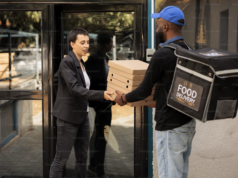
When the whole world is on lockdown, people rely on logistics and delivery to get the products they need, and not just for the moment. It shows us where commerce is heading and that we can expect customers to rely even more on home deliveries and ordering products online.
During the pandemic, companies that provide groceries have seen a huge surge in deliveries. Some have even had growth of over 200% like Walmart Grocery. Amazon was forced to hire around 100k new employees to meet the demands of its customers.
How Companies are Adapting
During these difficult times, supply chains have been disrupted by border delays, slow deliveries, sick employees, and cluttered processes caused by safety measures. That’s why various big data and geospatial companies have been using UAV data, geolocation data, and satellite data for tracking distributions and shipments.
The main reason for this is to see if there is any lack of distribution, closures, or bottlenecks that are disrupting product movement to stores. At the same time, they can be used to predict problems before they occur and cause disruptions that can be harmful to the whole supply chain.
There have been calls for adopting various geospatial and digital tools even before the pandemic happened. All this technology can help monitor the supply chains globally. Real-time tracking across the global network makes it easy to identify issues and establish accurate projections.
The Use of Geospatial Technologies
In this situation, where companies can’t make short-term predictions, they have to react accordingly. Deliveries have to reach customers as quickly as possible and be flexible for incoming surges. The best way for companies to react is to know where their risks are at all times.
That improves their ability to plan and act preemptively, which is where geospatial technologies can help in many ways. Here is how.
Also Read: Geospatial industry has bright future in post-COVID world
Geospatial Monitoring
Monitoring has never been more important for supply chains. Geospatial tracking allows companies to be active in their control and understand where their disruptions are. It’s possible to triangulate in just a couple of minutes how the whole chain will be affected in a certain period.
Without clear visibility beyond the first-tier chain, they can’t recognize where threats are. That’s especially important now during the pandemic, where variables change frequently.
Geospatial Technologies for Scheduling Orders
As the number of orders is surging, companies are finding it difficult to honor their service-level agreements and give accurate promises to customers. Your SLA is decided on essential metrics like current resources, the time required, profitability, and the locations.
Those orders that require a lot of time to deliver might require additional delivery costs to get there on time. With geospatial technologies, companies can reduce their turnaround time by finding optimal drop-off and pickup centers to find a balance between cost and time.

Planning and Network Mapping for Supply Chains
Geospatial technologies allow useful mapping. That means tracking the whole supply chain, all the production units, routes, and nodes. This process makes it easier to identify contractors and suppliers while understanding all the shipping routes available.
It also allows companies to see which routes are most vulnerable and subject to delays. They can spot them historically and avoid them when necessary. Mapping also allows tracking the performance of warehouses by looking at essential metrics such as demand and average shelf time.
Inventory Management
Geospatial technology allows companies to inventory management. It does this by providing better inventory evaluation and useful demand mapping. Knowing the amount of stock ready for delivery is helpful for adjusting production and setting up proper delivery channels.
Demand mapping helps companies respond better to their customers and predict potential surges. Important metrics like frequency, density, types of order, and the number of returns can all help prepare better delivery networks in the future.
Supply Chains are Expanding
The coronavirus pandemic has also forced companies to expand their deliveries to areas they haven’t serviced before. Companies are using external data like satellite data, traffic, weather, and COVID-19 datasets to map opportunities and demands in different areas.
Furthermore, with the right data sets and tools for gathering data, companies will be able to navigate in various markets and make better strategic decisions.
Bottom Line
The pandemic has revealed various weaknesses of supply chains. However, after the initial shock, companies have bounced back and adopted GIS technologies and many others to improve their overview of supply chains, potential issues, performance analysis, and monitor critical metrics.
This problematic situation has made companies realize how vulnerable they are. Geospatial technologies will help them improve their organization and logistical strategies for the future.
Also Read: COVID-19: When a crisis becomes a catalyst for change