Home 2023 July

Monthly Archives: July 2023

Drones Redefining Retail

Drones Redefining Retail

Drones have become a pivotal force in the retail sector today. They offer advantages such as cost reduction, time-saving, enhanced customer experiences, improved efficiency, and heightened safety.

Last-mile drone deliveries are proving to be immensely useful in regions where road transportation is challenging or infrastructure is unreliable.

The emerging market for delivery drones is driven by surging consumer demand for expedited deliveries, and a mounting emphasis on reducing carbon emissions. Combined with tech advances, unmanned aerial vehicles are increasingly supplanting traditional delivery routes, signaling a new era in contemporary logistics.

Whether it be seamless shopping experiences during day-to-day retail operations, marketing photography, inventory management, customer behavior analysis, delivery services, transportation, or security; Drones have set themselves in stone in the retail industry.

Transforming Deliveries

Projections indicate that by the year 2028, the delivery drone market is poised to soar to an impressive valuation of $1.29 billion, exhibiting a remarkable compound annual growth rate (CAGR) of 40% from 2021 to 2028.

Drones possess a distinct advantage in providing swifter delivery than traditional transportation methods. The escalating demand for high-efficiency, particularly in same-day deliveries, coupled with intensifying competition in the retail market, impels retailers to adopt drones for speedy delivery services.

From packages to perishable items like tea or soap, drones enable local retailers and fulfillment centers to promptly deliver goods to customers.

A notable example would be Walmart through Droneup which over the past year has safely completed more than 6,000 deliveries in 7 states to customers in as little as 30 minutes. The items delivered via drone included ice cream, chicken, and lemons. 85% of items at this point meet the 10-pound payload capacity (foreseeable increase to 15 pounds) and volume requirements for drone delivery in a Walmart Neighborhood Market.

This vast array of products ensures a diverse range of goods can be swiftly transported, facilitating faster returns and expediting their reintegration into the supply chain.

Embracing drone deliveries empowers retailers to exercise better control over their products thereby the entire logistics chain. By eliminating the need for thirdparty delivery services, retailers can closely monitor and regulate every step of the logistics process.

A good example of it is Amazon’s Newest Prime Air Delivery Drone, the MK30, which has been engineered to withstand a wider range of temperatures and light rain. The improved design also promises an extended range, offering consumers more opportunities to utilize the service.

Monitoring Supply Chain Routes & Aiding Inventory Management

Adding onto the drone delivery management in areas of poor infra and challenging road transportation, monitoring supply chain routes for disruptions is also another area that the drones can address. This could alleviate the impact on truck deliveries. These drones can monitor road conditions, construction slowdown areas, and other hazards while reporting the information to logistics managers who can quickly select alternative delivery or shipping routes.

Drones streamline store inspections

Retailers can deploy drones equipped with sensors to locate and measure inventory across their facilities, including networks and containers. The application of drones within warehouses and fulfillment centers has proven exceptionally valuable for indoor inventory management.

Drones effortlessly navigate through unstructured large-scale environments, accessing areas that are risky to human inspectors. The use of drones to scan and check inventory in the warehouse using OCR (Optical Character Recognition), RFID (Radio Frequency Identification), and barcode readers can offer better inventory management.

An example of the above would be Ingka Group, an innovative retailer, in collaboration with the Supply Chain Development Team at Inter IKEA Group, and Verity, an indoor drone systems provider, embarked on a venture to develop a fully autonomous drone solution.

“Some retailers have tried different drone solutions, but IKEA is the first retailer to implement a fully autonomous drone solution for inventory at this scale. The solution was developed together with Verity, a provider of indoor drone systems,” says Marcus Baumgartner, Global Customer Fulfilment Manager Ingka Group, IKEA Retail (Ingka Group).

Drones streamline store inspections and assist store managers in swiftly assessing inventory levels, surpassing the efficiency of human associates. Drones aid in timely replenishment, by detecting dwindling stock, ensuring accurate and realtime inventory data.

Enhancing Retail Security through Indoor Surveillance Drones

Security stands as a paramount concern within the retail realm. Security personnel and cameras alone cannot adequately cover all areas of a retail property in event of a theft.

Drones offer a novel solution by providing real-time video surveillance of facilities, warehouses, stores, and their surroundings. They enable monitoring and inspection of critical areas and locations that cameras and security guards may not effectively cover.

Drones, also in conjunction with security sensors, can detect potentially suspicious activities. In the event of theft, drones trigger the security system, promptly notifying the security team while continuously tracking the perpetrator, sharing real-time location updates, and alerting the authorities.

The question may be asked as to why not static cameras instead of drones? Though they have their advantages, stationary cameras come with their own set of cumbersome problems, primarily being stationary. This can be a real problem as the location of the cameras can be a target for outside interference.

Cameras can’t communicate or respond to changes in instructions while autonomous drones can be very interactive. Drone fleets can fly round the clock, automatically docking in charging stations when their power runs low.

The capital expenditure on drones is also a fraction of the cost of stationary cameras or even human personnel.

A leading Robotics company, Indoor Robotics leads the way in this aspect. Their primary indoor surveillance drone Tando is designed to efficiently handle tedious, repetitive tasks to reduce false alarms, costs, and risks in various environments, especially in warehouses and retail malls, and stores.

The advantages include detecting intruders, validating false alarms, and picking up on fires or any safety hazard using sensors. MedOne, Israel’s largest data center hub, has implemented Indoor Robotics’ Tando system at its biggest server farm in Israel for improving security and safety.

Elevating Retail Marketing Photography

For effective product promotion and advertising, compelling and high-resolution product photos are crucial. However, budget constraints may hinder retailers from accessing professional photography studios or hiring expensive photographers.

Drones offer a partial solution by capturing photos from diverse angles and distances, including bird’s-eye views and ground-level shots. This cost-effective approach ensures the acquisition of clear product images, which can be utilized in marketing campaigns.

Drones for commercial advertising have been huge in the retail industry. Businesses that cater to attract consumers to their products by taking very appealing pictures and videos using aerial drones for their advertisements.

Photographers or videographers also resort to taking pictures and videos to showcase a wide variety of products of a business. These can be featured on the company website, print advertisements, and billboard signage.

Unveiling Consumer Insights by Observation

Aerial drones, equipped with cameras and positioned at elevated vantage points, capture and record customer movements and behavior.

These recordings unveil shopping routes, duration spent at specific sections, and overall patterns.Retailers can harness this particular capability of drones to track and observe consumer behavior, unlocking invaluable insights for analyzing and understanding purchasing preferences and traits.

One example is Indoor Robotics mentioned previously whose drones collect and analyze real time data in order to be prepared to relay data or seek command in case of an emergency. These drones can collect data and provide retail analytics for daily operational tasks within the areas premises in real time too.

This information can also be utilized to arrange product placements, optimize floor spaces, and enhance shelf layouts. In essence, the data derived from drone observations fuels design and decoration decisions that attract more customers which in turn drives sales.

Another imminent example of it is Dronedek, a provider of a mailbox-as-a-service platform.

They have developed a solution for their food delivery problem where understanding how far the customers are and their eating times can help with Dronedek’s mailboxes receiving the food at the correct time through autonomous drones. The drones can also recharge their batteries and even keep food deliveries hot or cold.

Drones as Personal Shopping Assistants

In the world of retail, customers often invest considerable time in finding the right products. So deploying drones as shopping assistants expedites and streamlines this process. This enables customers to swiftly locate desired items, verify prices, and obtain accurate product information.

This is particularly helpful during peak sale seasons when sales associates may be overwhelmed and unable to attend to every customer promptly.

These drones are equipped with sensors, which can verify prices and cross-reference information from centralized computer databases. Employing drone shopping assistants not only reduces labor costs but also saves time for both customers and staff.

Walmart does this where the utilization of drones as Personal Shopping Assistants would facilitate the identification and price verification of products within the store, catering to the needs of customers.

The envisaged system would allow consumers to request the presence of a drone via an electronic mechanism. Once engaged, individuals would have the option to either input the desired item manually or employ the drone’s integrated scanning system to initiate the search.

In the case of product exploration, the drone would adeptly guide the user at a deliberate pace to the precise aisle and location where the desired item can be found. With their increasing adoption & progression, drones & unmanned aerial vehicles are reshaping the retail landscape and propelling a new era of efficacy and customer satisfaction in logistics and operations.

AI’s Promethean Dilemma

0
AI’s Promethean Dilemma

Barbenheimer, a portmanteau of ‘Oppenheimer’ and ‘Barbie’, is the latest internet trend.

While the two namesake movies, one a biopic of physicist J. Robert Oppenheimer, the ‘father of atomic bomb’, and the other a fantasy tale of the eponymous doll, have nothing in common, the seamless juxtaposition of grim reality and innocuous fantasy, has got minds racing.

Nolan’s recent statement on the movie being a warning about Artificial Intelligence, which he regards as more baleful than nuclear power, will yet again draw attention to what I term AI Apocalypse Now anxiety.

AI Peril?

Dubbed as the auteur’s masterpiece, ‘Oppenheimer’ is a silver-screen adaptation of the Pulitzer-winning American Prometheus: The Triumph and Tragedy of J. Robert Oppenheimer by Kai Bird and Martin J. Sherwin.

Overlooking the morbid fears of AI, and Oppenheimer’s racked conscience after ‘Fat Man’ was dropped on Nagasaki — leading to his refusal to helm the Hydrogen Bomb project — there is something innate about the teleology of innovations, and epistemic institutional limitations.

Nolan’s comparisons of AI with thermo-nuclear energy, and his ominous message, will certainly have a massive resonance, as it comes at a time when leading scientists and entrepreneurs are already expressing dismay about AI.

What differentiates Nuclear from AI is the Catch-22 of AI regulations, which is the highly decentralized and self-amplifying nature of AI, and to a large extent, the futility of regulations that can’t match the exponential pace of innovation.

Enduring Myth 

Illustrative here is the Greek myth of Prometheus, a Titan who stole fire from the Gods to give it to mankind, enabling the progress of civilization.

For his defiance, Prometheus was chained by Zeus to a rock where an eagle feasted on his liver, which grew every night. The harrowing ordeal represents the complexity of the human condition.

Prometheus is a central figure in the Western civilization’s narrative of progress as well as a cautionary reminder of the constraints of knowledge, looming uncertainty, and invisible fetters.

The profound impact of the Promethean myth on the West is grasped from the fact that Karl Marx as well as Ayn Rand have hailed the Greek Titan as the glowing emblem of human will, knowledge, endeavor, striving, and innovation.

But at the same time, progress is seldom unidirectional, path-dependent, and deterministic. It is often transplanted with the seeds of its demise.

With de-growth and climate transition in vogue, the UN Security Council held a meeting on AI risks, highlighting the Promethean threshold of AI whose blurry lines we are afraid to cross.

High-Risk Scenario?

The Chinese Ambassador to the UN called AI a ‘double-edged sword’, adding, “whether it is good or bad, good or evil, depends on how mankind utilizes it, regulates it and how we balance scientific development with security”.

He has a valid point, and so far, so good. But that’s exactly where the Promethean Trap lies. The inability to fathom what lies ahead, and compute the unintended consequences of any breakthrough that transforms the world forever.

The Greek word for a fatal flaw leading to a protagonist’s downfall is Hamartia. The debate over whether AI would be a Frankenstein monster or a subservient handmaiden reeks of escapist self-indulgence. Neither exuberance nor premonition would take us anywhere.

There is a need to first get at the root of complex phenomena and then devise impactful solutions.

Are we entering into an epoch of AI Doomsday? Not Yet.

In ‘Birth of Tragedy’, Friedrich Nietzsche says real tragedy occurs when ‘order’ and ‘chaos’ indistinguishably merge into each other. As of now, we neither have AI-imposed order, nor anarchy let loose by it.

Australia’s SmartSat, ESA’s Φ-lab Collaborate on Earth Observation

0
Australia’s SmartSat, ESA’s Φ-lab Collaborate on Earth Observation

Australia's SmartSat and ESA’s Φ-lab to Collaborate on Earth Observation

SmartSat has signed a new agreement with the European Space Agency’s (ESA) Φ-lab to collaborate on Earth Observation (EO) research.

The European Space Agency’s Φ-lab is a research center with a mission to accelerate the future of Earth Observation through transformational innovations and new technologies, including artificial intelligence (AI) and onboard processing.

The agreement builds upon SmartSat’s existing relationship with Φ-lab, who supported cosine to develop the HyperScout imager payload. This payload is currently being integrated into the SmartSat-led South Australian Kanyini satellite, following consultations with Φ-lab regarding its Φ-sat-1 satellite mission. The synergies between these missions offer significant collaboration opportunities between SmartSat and Φ-lab regarding onboard intelligence for EO applications, creating a solid foundation for further research activities under the new agreement.

SmartSat CEO Professor Andy Koronios, who signed the agreement in Rome, said, “We have identified new collaboration opportunities between researchers at the Queensland University of Technology and Φ-lab to develop advanced AI capabilities using hyperspectral satellite imagery. This will create the next generation of predictive intelligence that can forecast and monitor agricultural and environmental activities and disaster events with greater accuracy.”

As part of the new agreement, SmartSat and Φ-lab plan to establish an exchange program for research personnel and SmartSat PhD students to undertake internships at Φ-lab.

Mahindra, NXP sign MoU to Drive Next-Gen Smart Electric Mobility

0
Mahindra, NXP sign MoU to Drive Next-Gen Smart Electric Mobility

Mahindra, NXP sign MoU to Drive Next-Gen Smart Electric Mobility

Mahindra & Mahindra, a leader in automotive, farm, and services businesses in India, signed an MoU with NXP® Semiconductors, a global provider of secure connectivity solutions for embedded applications. With the association, M&M and NXP will jointly explore the electric and connected vehicle landscape, covering a wide range of vehicles including utility vehicles, light commercial vehicles, farm equipment, and tractors.

Mahindra intends to explore NXP’s extensive portfolio, innovative automotive system solutions, and expertise in zonal and domain controllers, electrification, advanced vehicle networks, and secure car access technologies for their upcoming platforms. The step is in line with Mahindra’s commitment to deliver innovative solutions that enhance the safety, eco-friendliness, and overall enjoyment of the commuting experience for its customers.

Rajesh Jejurikar, Executive Director & CEO – Auto and Farm Sectors, Mahindra & Mahindra Ltd. said, “We leverage NXP’s advanced technologies and solutions to build SUVs that are safer, highly connected, and environmentally friendly.”

Mahindra will also get access to NXP’s robust partner ecosystem, comprising Tier 1, ODM, IDH, module vendors, and integrators. This will also provide valuable insights into NXP’s technology roadmap, encompassing synergistic areas like the Smart Home and Industrial sectors.

Trimble Launches Cloud-Based Version of LIMS Software for Forestry

0
Trimble Launches Cloud-Based Version of LIMS Software for Forestry

Trimble Launches Cloud-Based Version of LIMS Software for Forestry

Trimble announced the launch of LIMS PRO, a new cloud-hosted version of its widely used Log Inventory and Management System (LIMS) to manage sawmill raw material procurement. As a cloud-based log settlement solution, LIMS PRO is designed to improve operational visibility for mills. It enables small- and medium-sized forest product companies to realize productivity and growth gains that only large companies have historically been able to afford by digitizing lumber supply chain workflows.

Taking the power of LIMS and creating a more accessible Software-as-a-Service (SaaS) version, this robust business management software streamlines contracts, receiving, inventory and settlement processes into a single platform, providing forestry companies with a complete picture of their operations. In addition, the software assists with mobile ticketing in the woods before the logs make their way to sawmills, eliminating the need for manual recordkeeping.

Comprised of a mobile application, web-based applications and an onsite receiving application connected to the weigh scale, LIMS PRO provides an easily accessible reporting dashboard that shows exactly what is happening from forest to sawmill. Whether in the woods or at the weighing scale, this new software simplifies the complete process for sawmills—taking it from days to hours through improved data accuracy, real-time reconciliation, minimization of processing errors and faster truck turn times.

Kevin Toohill, general manager of Trimble Forestry said, “LIMS PRO enables partners and others along the value chain to digitally transform their operations—moving from paper tickets, log sheets and manual data entry to modern workflows. This means increased accuracy and less time spent tracking down paper copies or entering data multiple times.”

In addition to digitizing the supply chain, this new software enables forestry organizations to:

  • Simplify load reconciliation by syncing the weigh scale to the settlement system within minutes
  • Automate invoicing and financial settlements
  • Track yard inventory while monitoring costs to procure timber inventory
  • Manage key performance indicators and assess the overall health of the business
  • Seamlessly share data with partners
  • Eliminate need for additional IT infrastructure as the solution is hosted and managed in Trimble’s secure AWS cloud environment
  • Integrate mobile tickets, using the LIMS mobile application, with weigh scales to replace hand-written tickets and log sheets

FNT Software, MHI sign MoU to Improve Data Center Efficiency and Sustainability

0
FNT Software, MHI sign MoU to Improve Data Center Efficiency and Sustainability

FNT Software, a provider of software solutions for the integrated management of IT, data center, and telecommunication infrastructures worldwide, announced an MOU with Mitsubishi Heavy Industries, (MHI), an industrial group spanning energy, smart infrastructure, industrial machinery, aerospace and defense. Together, FNT and MHI will combine their innovative solutions and also develop new solutions to improve the management of data centers and to tackle energy consumption challenges faced by data centers and drive sustainability.

As part of the partnership, MHI’s solutions for analysis and energy management will be integrated into FNT’s data center infrastructure management (DCIM) software solution. The collaboration also includes the development of new solutions which will enable the seamless operation of IT and infrastructure facilities and optimization of power consumption. Additionally, FNT will offer planning and operational support to leverage changes in new technologies and improve existing operations in data centers, such as cooling optimization and energy efficiency.

“With the rapid acceleration of digitalization, power consumption within data centers is rising at a significant pace, posing many challenges in terms of energy conservation,” said Carsten Wreth, CEO of FNT Software.

“MHI is keen to support the ongoing transition of Data Centers towards sustainability and energy efficiency through power generation and cooling solution. Our new Partner FNT has already supplied its DCIM solution integrating data center IT and infrastructure management, monitoring, and planning functions to more than 500 customers worldwide, contributing to the realization of sustainable data centers through operational optimization. The collaboration with highly valued FNT will accelerate contributing to further optimization in Data Center infrastructure.”, says Shin Gomi, General Manager in Business Development, Growth Strategy Office of MHI.

In demonstration tests of immersion cooling units now under development, MHI has achieved a significant reduction in requisite power consumption compared with conventional data centers. By integrating liquid cooling technologies with FNT’s DCIM solution, systems can transfer heat more effectively, allowing for lower fan speeds and reduced energy consumption. This results in overall energy savings, energy efficiency and decarbonized data centers as well as green transformation (GX) in the IT field.

Apple’s “Ajax” Language Model Takes on Chatbot Giants

0
Apple’s “Ajax” Language Model Takes on Chatbot Giants

Tech giant Apple is set to rival OpenAI’s ChatGPT and Google’s Bard with its own generative AI tools. Bloomberg News revealed that Apple has been actively developing large language models using its proprietary framework, dubbed “Ajax”.

Insiders disclosed to Bloomberg News that the company is currently testing a powerful Chatbot, internally referred to as “Apple GPT”, further mirroring the capabilities of Bard and ChatGPT.

Apple appears determined to make a significant AI-related announcement in the near future. Spearheaded by John Giannandrea, head of machine learning and AI, and Craig Federighi, top software engineering executive at Apple, several teams are working on this cutting-edge AI initiative. The new virtual assistant, which can summarize text and answer questions, is already being utilized for product prototyping within the company.

Constellr Raises €17 Million for Thermal Satellite Data Startup

0
Constellr Raises €17 Million for Thermal Satellite Data Startup

German thermal satellite data startup, Constellr, has successfully raised €17 million ($18.93) in seed funding for accelerating the deployment of its thermal imagery satellites and meet the growing demand for their services worldwide.

The funding round was led by Karista, with Einstein Industries Ventures, FTTF, Lakestar, Vsquared, Amathaon Capital, Natural Ventures, OHB Ventures, and EIT Food.

The company’s operational constellation is set to include two satellites, scheduled to be launched in 2024. With just four satellites in place, Constellr will be able to deliver daily imagery to any location on the globe, depending on market demand.

One significant achievement for Constellr was being awarded a 5 million euro contract by the European Commission and the European Space Agency to supply thermal data for the Copernicus Earth-observation program. This funding, in addition to the recent seed investment, brings Constellr’s total funding to around $28 million.

Max Gulde, CEO and co-founder of Constellr expressed excitement about the company’s approach and potential impact on the agricultural sector. He believes that Constellr’s precise thermal imaging data will facilitate a paradigm shift in how the global agricultural industry adapts to climate change. Having received the backing of investors such as Karista and Einstein, along with their existing investor base, serves as a validation of their innovative solution.

Michael Thomas, the Karista investment director, sees investing in Constellr as an opportunity to be at the forefront of the revolution in space technology. He believes that this revolution will significantly transform terrestrial industries, including agriculture and climate-related concerns. With the additional funding and the expertise of Constellr’s management team, Thomas expects the company to solidify its leading position in Europe and expand its commercial footprint globally.

Geo Tech Updates This Week 

0
Geo Tech Updates This Week 
Geo Tech Updates This Week

In this week’s bulletin, ISRO achieves a historic milestone with the successful launch of India’s lunar mission, Chandrayaan-3. Impact Observatory teams up with Planet to bring you near real-time change monitoring services. Dubai’s cutting-edge Cloud Initiative takes digital infrastructure to new heights. Plus, the U.S. Department of Agriculture invests $300M in greenhouse emissions monitoring.

XAG P100 Pro Agricultural Drone Launches in Vietnam

0
XAG P100 Pro Agricultural Drone Launches in Vietnam
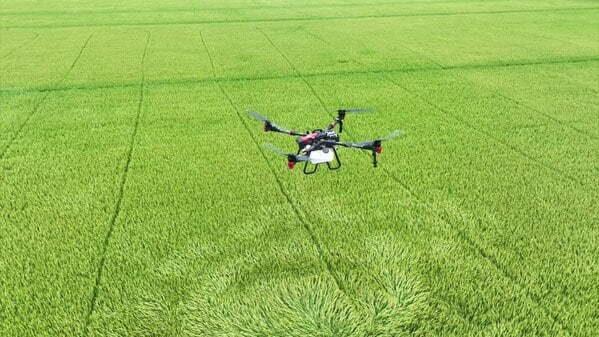
XAG P100 Pro Agricultural Drone flying over a rice field in Vietnam

XAG P100 Pro Agricultural Drone flying over a rice field in Vietnam

P100 Pro, the latest generation of XAG Agricultural Drone, has been released in Dong Thap province of Vietnam, taking efficiency and agility on farms to higher levels. This product provides Vietnamese farmers with a fully autonomous, easy-to-operate solution with a large payload of 50 kilograms. As a proven way to lower production costs and mitigate climate risks, XAG P100 Pro is expected to be a widely used tool in Vietnam.

The launch also established Dong Thap Digital Agricultural Cooperative, which aims to promote the application of drone technology in rural areas. From organizing drone training courses to providing farmers with easy access to innovations, these actions will upgrade the digital skills of rural youth and create more jobs, such as drone operators and engineers, with a decent income.

Vietnam is the world’s major agricultural exporter of rice, banana and durian, while it has also been faced with a shrinking agricultural population. Despite a strong global demand for Vietnam’s food export, a growing number of workers have moved to the manufacturing and service industries. The agri-tech company XAG sees this as an opportunity to fulfil its mission of advancing agriculture.

The XAG P100 Pro Agricultural Drone is an electric unmanned aerial system, designed for precise seeding, crop spraying, fertilizer spreading and field mapping. It combines a flying platform and different payload systems to achieve multiple functions. This technology is not a new concept but an upgraded version of its predecessor P100, which has helped local farmers ease the burden and grow more with less.

Adopting the foldable quadcopter structure, XAG P100 Pro reduces its folded volume by 62%. Therefore, the drone can be easy to transport on the way by a minivan and even a motorcycle. Equipped with the XAG RevoSpray 3 system and a 50-litre smart liquid tank, it can spray at a maximum flow rate of 22 litres per minute. Its crop protection efficiency reaches up to 19 hectares per hour for open fields and 2 hectares per hour for orchards.

XAG Mekong, as the authorized distributor of XAG products in Vietnam, offers sales, training, and after-sales support on digital agriculture technology. Through local collaboration, XAG P100 Agricultural Drone has been widely applied across the Mekong River Delta, covering rice, banana, and durian plantations.

The launch of the XAG P100 Pro Agricultural Drone caters to the market demand for a more efficient yet flexible farming tool. As the adoption of drones becomes widespread in rural Vietnam, it opens up greater access to diverse career opportunities for the next generation of farmers.

PlanetiQ to Deliver GNSS-RO Data to NOAA Under Contract

0
PlanetiQ to Deliver GNSS-RO Data to NOAA Under Contract

PlanetiQ has started to deliver radio occlusion data to National Oceanic and Atmospheric Administration (NOAA) under a previously awarded contract. PlanetiQ announced this week it will begin daily delivery of its signal-to-noise ratio (SNR) GNSS-radio occultation data from its constellation of satellites.

NOAA awarded PlanetiQ and Spire Global indefinite-delivery/indefinite-quantity (IDIQ) contracts in March as part of its Commercial Data Program (CDP). The contract has a maximum value of $60 million shared between the two vendors in five years.

NOAA will use the data for its operational data systems, including weather and space weather analysis and prediction systems, and weather, climate, and atmospheric research purposes.

PlanetiQ claims it has the only system that can profile the thermodynamic state of the atmosphere with very high vertical resolution, precision, and accuracy, in all weather conditions. The company has two satellites, GNOMES-2 and -3 on orbit collecting radio occlusion measurements. The company plans to launch more spacecraft in the next 18 months to expand global coverage and resolution to further support NOAA and international partners for weather forecasting and climate research.

PlanetiQ CEO Ira Scharf said, “By incorporating PlanetiQ’s commercial high-quality GNSS-RO data, coupled with our deep understanding of RO technology, NOAA will have the information to significantly improve short and medium-range weather forecasts, and provide essential insights to enhance climate change research for the government, military and the private sector.”

Role of Drones in Mine Site Monitoring

Role of Drones in Mine Site Monitoring

SimActive organized a webinar on ‘Mining Site Monitoring Using Drones’,  where a discussion was held on how drones and imagery play an essential role in mining site monitoring.

Australia’s longest continually operated uranium mine, known as The Ranger Uranium. For four decades, it provided a reliable and safe supply of uranium ore concentrate (U3O8, or UOC) to the global energy market. In January 2021, the mine has been closed temporarily, because the site needed time to rehabilitate. The mining operator Energy Resources of Australia (ERA) has been ordered to carry out the process of removal of nuclear-safeguarded material from the mine site and return it to its previous condition as it was before the mining started.

Tim Whiteside, Senior Research Scientist at the Government of Australia Department of Climate Change, Energy the Environment and Water (DCCEEW) and his team of scientists are monitoring the remediation of the mine using various tools and techniques.

In the webinar, Eric Andelin CP, Senior Workflow Specialist at SimActive, and Tim Whiteside discussed how drones and other emerging techniques are useful to collect imagery not only of the mine but multiple sites within the park boundary to ensure the clean-up is going according to plan and not adversely affecting the environment within the surrounding park boundary.

There is a lot of data is collected by drones, and to convert it into meaningful information, Correlator3D tool is used. Correlator3D is a high-end mapping software, for the rapid processing of imagery from drones, aircraft, and satellites. It also helps to produce base maps products with using AI/Deep Learning Techniques:

  • YOLO (You Only Look Once) models for plant detection and species classification
  • Growth dynamics over time (plant size, mortality rate, and species composition)
  • Correlate these metrics with manual observations for plant health
  • Roll out as a monitoring tool over larger areas

The software acts as aerial triangulation (AT) and produces dense digital surface models (DSM), digital terrain models (DTM), orthomosaics, point clouds, vectorized 3D features, and 3D models.

Asset Company acquires Digital Construction GIS platform

0
Asset Company acquires Digital Construction GIS platform

Vitruvi Software, a provider of utility construction software solutions, announces its acquisition by the Software Growth Equity Team of Bow River Capital, a Denver-based alternative asset manager.

This strategic move is set to fuel Vitruvi Software’s expansion plans and foster continued innovation in its product offerings. With a steadfast commitment to digitizing the construction industry, Vitruvi Software has built one of the industry’s most powerful and capable cloud solutions for powering digital construction management in the network, power and utility sectors.

This acquisition by Bow River Capital’s Software Growth Equity Team presents an exciting opportunity to leverage the Team’s industry and operational expertise, resources, and capital to drive even greater growth for Vitruvi Software’s platform offering.

“We are thrilled to join forces with Bow River Capital and embark on the next chapter of Vitruvi Software’s journey,” said Bryan McIver, CEO of Vitruvi Software. “This partnership will provide us with the necessary capital and resources to further enhance our software solution and solidify our position as a product leader in digital construction management for geospatial projects.”

Bow River Capital’s extensive experience in the technology sector and its history of partnering with innovative software companies make them the ideal partner for Vitruvi Software. The investment firm’s strategic guidance and financial backing is designed to enable Vitruvi Software to seek to accelerate product development, pursue new market opportunities, and enhance customer experience.

“Vitruvi Software has demonstrated exceptional platform capabilities, an intimate understanding of the digitization of geospatial construction management, and a high growth trajectory,” stated Steve Joanis, Managing Director at Bow River Capital. “We are excited to collaborate with the talented team at Vitruvi Software and provide them with the necessary resources to drive their vision forward. Together, we will endeavour to unlock new avenues for growth and solidify Vitruvi Software’s position as a leading software provider for utility construction.”

All About ISRO’s Heaviest Workhorse that Lifted to the Moon

All About ISRO’s Heaviest Workhorse that Lifted to the Moon

India’s most ambitious moon mission, Chandrayaan-3 lifted off last week, which is facilitated by the indigenously developed LVM3 (Launch Vehicle Mark-3). LMV3 carries the essential components, including the Lander and Rover, into space. Once in orbit, the propulsion module will play a crucial role, transporting the Lander and Rover configuration to a lunar orbit approximately 100 kilometers above the moon’s surface. The rover is expected to remain operational for two weeks, conducting a series of experiments.

This video will help you know LMV3 in a more detailed way:

ICAR to Encourage Technology to Address Challenges of Climate Change

0
ICAR to Encourage Technology to Address Challenges of Climate Change
The Indian Council of Agricultural Research (ICAR) has implemented multi-pronged actions to address the challenges created by climate change and take steps, based on technology, that will help farmers and governments build resilience, said Himanshu Pathak, Director-General of ICAR.
On the 95th Foundation and Technology Day of ICAR in New Delhi, Dr. Pathak said that unprecedented growth in the agriculture sector has been recorded. He emphasized that India is not only self-sufficient in the production of food grains but is also exporting agriculture and agricultural products in large quantities.

He highlighted the achievement made by ICAR such as the development of 346 varieties of food grains, 99 varieties of horticulture crops, mapping of efficient cropping system zones, fertigation schedule for 24 crops, 28 new equipment and machinery, corona virus and lumpi disease vaccines, new diagnostics, breeding protocol of new fish breeds, conduction of 47088 on-farm trials and 2.99 lakh front line demonstration on new technologies.

He also mentioned that 58 patents and 711 technology licensing agreements were signed by agriculture scientists from different industries. In order to promote agriculture innovations for commercialization, Scientist-Industry interface meetings are also organized as side events.

China’s OpenAI alternative gets funding from food delivery giant Meituan

0
China’s OpenAI alternative gets funding from food delivery giant Meituan

Zhipu AI, one of China’s OpenAI challengers, has received funding from the country’s food delivery giant Meituan which has a market cap of around $100 billion.

Local media reported that Zhipu AI has added Meituan subsidiary as its shareholder with 10% stake in the firm. Its investors include Qiming Venture Partners, Legend Capital and Tsinghua Holdings.

Zhipu recently open-sourced its bilingual (Chinese and English) conversational AI model ChatGLM-6B, which is trained on six billion parameters and claims to be able to carry out inferences on a single consumer-grade graphics card, significantly lowering the cost of running an LLM. It also previously open-sourced a more robust, general-purpose variant, the GLM-130B trained on 130 billion parameters.

Meituan’s investment came after its acquisition of Light Years Beyond for $234 million.

GeoCue Unveils High-End LiDAR TrueView 3D Imaging Systems

0
GeoCue Unveils High-End LiDAR TrueView 3D Imaging Systems

GeoCue Unveils Three New, High-End TrueView 3D Imaging Systems

GeoCue, a provider of geospatial solutions for LiDAR mapping hardware & software, announces the release of three new, high-end TrueView 3D Imaging Systems. With unmatched precision and advanced capabilities, the all-new TV625, TV680, and TV680LR are set to redefine the standards of aerial imaging technology. The parent company of GeoCue is mdGroup.

These three news systems, designed and manufactured in the USA, combine a very lightweight and compact laser scanner with 3 cameras to deliver unparalleled accuracy and efficiency in geospatial data collection. Besides integrating state-of-the-art components and cutting-edge technologies, the new TV625, TV680, and TV680LR systems are NDAA compliant, empowering professionals across a wide range of industries, including surveying, construction, infrastructure management, and environmental monitoring.

Frank Darmayan, CEO of GeoCue, recognizes the expansion of the TrueView portfolio gives customers access to a full range of advanced-level systems for collecting photogrammetry and LiDAR. “The TrueView product line has long been acclaimed for its exceptional quality and reliability, and the latest additions to the series build upon this legacy. Combined with our LP360 software, we knew that we could deliver a powerful one-two punch into this segment, starting with the new TrueView 680 and 680LR”

Darmayan added, “TrueView 680LR is built with the Riegl VUX-1LR with up to a 360-degree field of view, five LiDAR returns, and typical accuracy of 15mm and precision of 5mm. The 680 is integrated with the Riegl VUX-1UAV providing unmatched 10mm survey-grade accuracy and an extremely dense dataset with up to 400pts per m2 at 80m flight height. Both systems capture highly detailed survey data enabling our customers to generate unmatched deliverables.”

Vivien Heriard-Dubreuil, CEO of GeoCue’s parent company mdGroup explained “We are continuously aligning our products with customer needs. We are also pleased to announce the release of the new TrueView 625. This system is based on the Riegl mini-VUX 1, similar to our TrueView 655/660, with triple cameras… but hits a sweet spot on price and performance. It’s already getting quite a bit of attention from our customers, who say it fills an important niche. Best of all, all TrueView 600-series payloads are NDAA-compliant.”

Russia Plans To Partner with India on Quantum Computing

0
Russia Plans To Partner with India on Quantum Computing
The Russian Quantum Centre (RQC), a Russian non-government entity, is planning to partner up with Indian academic and research institutes to build quantum applications and hardware for public services, said Ruslan Yunusov, chief executive and co-founder of RQC.
According to him, the Russian government would formally bring up the issue during the BRICS (Brazil, Russia, India, China, and South Africa) summit.
“We have not signed any official contracts and partnerships so far. However, next year, we’ll be discussing this on the platform of Brics. We’ve held and discussed potential ideas for mutual collaboration among scientists, and there is a huge mutual interest among our countries,” Yunusov said.
With geopolitical tensions rising, it is now uncertain whether such alliances will materialize. Although several delegations from Russia have visited numerous institutions and government-affiliated departments in India during the past six months, according to a top official in the union government of India, nothing substantial has been inked. A prominent researcher in India agreed, saying that although there had been numerous talks about potential partnerships before last year, no official statement had been made as of yet.
Aleksey Akimov, principal investigator at RQC, said that there are multiple collaborative areas that Russia is keen to focus on with India in building quantum computing capabilities. “We have built a 32-qubit quantum computer, and we’re presently experimenting with ways to implement them in public service areas. With India, we have been in discussions for technical expertise on creating common standards in various areas of quantum computing,” Akimov said.

ModalAI Launches Smaller, Smarter, and Safer Development Drone

0
ModalAI Launches Smaller, Smarter, and Safer Development Drone

ModalAI Launches Smaller, Smarter, and Safer Development Drone

ModalAI, a Blue UAS Framework manufacturer of autonomous drone and robot technology, has launched its smallest, smartest, and safest development drone to date, the Starling. At only 275 grams and with an impressive 30+ minutes of flight time, the Starling is ModalAI’s lightest and longest-flying development drone. With Blue UAS Framework 2.0 autopilot, VOXL 2, at its core, the Starling accelerates the development of commercial drone solutions for OEMs.

The Starling is supercharged by the 16g VOXL 2, ModalAI’s companion computer and autopilot that was created to advance the Department of Defense’s Defense Innovation Unit Blue UAS Framework 2.0 Program. With 15 TOPS of AI processing, VOXL 2 boasts more AI computing than any other autopilot. Powered by the 8-core Qualcomm® QRB5165, VOXL 2 Starling houses a PX4 real-time flight controller, three image sensors, TDK® IMUs and barometer, GPS and WiFi connectivity and is assembled in the USA.

The Starling offers autonomous capabilities to accelerate autonomy development and reduce time to market for companies looking to integrate VOXL 2 into their drone solutions. Starling’s powerful onboard computing from VOXL 2 and SWAP-optimized form factor elevate autonomous UAV use cases like indoor asset inspection. Some of the pre-integrated autonomy models include:

  • Visual Inertial Odometry to navigate in GPS-denied environments
  • Visual Obstacle Avoidance to fly safely in tight spaces
  • 3D Mapping and Path Planning to fly hands-off in dynamic environments
  • TensorFlow Lite Neural Networks to run object classification, detection, and other models

Saudi Arabia buys Turkish drones in Turkey’s Biggest Defence Contract

0
Saudi Arabia buys Turkish drones in Turkey’s Biggest Defence Contract

Saudi Arabia has agreed to buy Turkish drones in the biggest defence contract in Turkey’s history with President Tayyip Erdogan on a tour in SA.

Saudi state news agency SPA reported that Erdogan and Saudi Crown Prince Mohammed bin Salman attended the signing ceremony between Baykar, the Turkish defence firm Baykar and the Saudi defence ministry.

Erdogan arrived in the Saudi Red Sea city of Jeddah on Monday for the first stop of a Gulf tour.

Saudi Arabia will acquire the drones “with the aim of enhancing the readiness of the kingdom’s armed forces and bolstering its defence and manufacturing capabilities,” Defence Minister Prince Khalid bin Salman stated in a tweet.

Baykar CEO Haluk Bayraktar said it was the biggest defence and aviation export contract in Turkey’s history. “We signed a contract with the Saudi Arabian defence ministry for the Bayraktar Akinci (unmanned combat aerial vehicle) export and cooperation,” he said in a Twitter post.

Developing a local military industry has been part of an ambitious plan by Prince Mohammed to diversify the kingdom’s economy away from oil.

The two countries also inked several memorandums of understanding in sectors including energy, real estate and direct investments, SPA said.

Vroom Delivery, Uber Partner to Improve Convenience Store Delivery Options

0
Vroom Delivery, Uber Partner to Improve Convenience Store Delivery Options

Vroom Delivery, Uber Partner to Improve Convenience Store Delivery Options

Vroom Delivery, a provider of proprietary e-commerce software for the convenience retail industry, and technology platform Uber have signed an agreement to expand and improve convenience store delivery options for consumers. Stores using Vroom Delivery’s backoffice, inventory, and loyalty products can now leverage enhanced integrations to Uber Eats to power orders from the Uber Eats app, as well as a new integration with Uber Direct, Uber’s white-label delivery fulfillment service, to power orders from merchant-owned channels.

Vroom Delivery currently partners with regional and national chains representing over 3,000 stores in nearly 40 US States to manage their proprietary ordering solutions. These retailers can now utilize the lowest-cost white label fulfillment solution in the market through Uber Direct, including the ability to deliver age-restricted items across much of the United States. Due to Vroom Delivery’s deep integrations into the convenience store technology ecosystem, many stores can list online every product that is available in-store, for on-demand delivery with no manual maintenance.

In addition to the benefits for merchant-owned channels, the partnership also benefits stores on the Uber Eats app, which can now leverage Vroom Delivery’s menu management services to create online menus with thousands of products and automated inventories. This leads to larger average basket sizes and fewer out-of-stock items listed online. Additionally, Uber is offering marketing incentives to convenience retailers on the Vroom Delivery platform that utilize Uber Direct for their white label fulfillment.

Stores using both the Vroom Delivery proprietary ordering solution and the Uber Eats Marketplace can have orders from both channels automatically rung-up and routed to a single tablet with thermal receipt printer capabilities. Vroom integrates with most major back-office systems including PDI, ADDS and KRS (formerly CMI).

Bernie Huddleston, General Manager of Uber Direct for US and Canada said, “By making it easier for convenience retailers to take in and fulfill online orders and leverage the network of couriers delivering with Uber, this new partnership will benefit consumers and convenience retailers alike.”

John Nelson, CEO of Vroom Delivery, said, “Our integrations and automation in the industry combined with Uber’s network of independent drivers and the Uber Eats Marketplace will both lower costs, improve efficiency, and increase the range of items consumers can get delivered. We can’t wait to see the results.”

Chinese Coal Company & Huawei Launch First Commercial Large AI Model for Energy Sector

0
Chinese Coal Company & Huawei Launch First Commercial Large AI Model for Energy Sector

Shandong Energy Group (Shandong Energy), Huawei, and Yunding Technology jointly launched the Pangu Mine Model, the world’s first commercial large AI model for the energy sector. The aim of the model is to enhance the application of AI in the mining industry and transform workshop-scale AI model development into factory-scale development.

Li Wei, Chairman of Shandong Energy, said, “Fellow travellers think alike. As a world-leading ICT infrastructure and smart device provider, Huawei shares Shandong Energy’s goal of digital transformation. The two companies are complementary to each other and are mutually reinforcing. We aim to improve the intelligence level of the mining industry by expanding the depth and breadth of AI applications in different scenarios, and continually using AI to deliver more automation, achieve greater efficiency, reduce labour intensity, and improve safety in the mining industry.”

As the pioneers of the world’s first commercial use of large AI models in the energy sector, Shandong Energy, Yunding Technology, and Huawei have begun implementing the first set of AI applications for mining. These were developed based on the pilot verification of large AI models in industrial production.

There are altogether 21 application scenarios related to 9 operating activities, namely, coal mining, tunnelling, primary transportation, auxiliary transportation, lifting, safety monitoring, rock burst prevention and coal preparation.

Rock bursts are a particularly challenging issue in mining. The primary means of preventing rock bursts is drilling destress holes, whose quality matters. Shandong Energy has managed to address this challenge in its Lilou and Xinjulong coal mines by deploying a large AI model.

With its visual recognition capabilities, the model can intelligently analyze the quality of stress relief drilling, and assist rockburst prevention personnel in quality verification, reducing their review workload by 82%. It used to take three days to complete such checks; now the time has been shortened to 10 minutes, with a 100% acceptance rate.

Shandong Energy, Yunding Technology, and Huawei established a joint innovation centre at the beginning of 2022. To make mines smarter, they introduced the Pangu Model, which features decoupled operation management and intelligent production, in-campus data processing, large-scale replicability, and learning and analysis from small samples.

The joint innovation centre’s AI operation system makes use of central training, edge inference, cloud-edge coordination, learning by using, and non-stop optimization. The centre’s AI management system consists of group management and coal mine execution. The management of coal production was transformed from being reactive and manual-intensive to being proactive and intelligent.

Zou Zhilei, Chairman of Huawei Mine BU, said: “AI will continue to power the upgrading of the mining industry and play an important role in making coal production safer, greener, and semi- or fully-automated. Huawei will continue to dive deep into industry transformation and make the powerful capabilities of the Pangu Model available to a wider range of industries. We will enable partners and work with them to solve industry problems in specific scenarios, creating greater value. The launch of the first commercial Pangu Mine Model has injected new impetus into the high-quality development of the mining industry and the energy sector at large.”