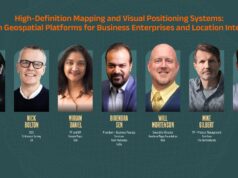
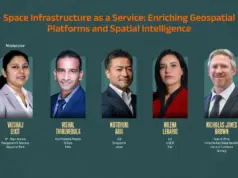
At GeoBuiz Summit 2026, global technology leaders, geospatial experts, and investors came together to examine how deep tech is transforming spatial analytics and geospatial intelligence. This panel discussion focuses on the convergence of artificial intelligence (AI), machine learning, spatial computing, and advanced geospatial analytics, and how these technologies are reshaping decision-making across industries.
Speakers from Google, Wherobots, NeoGeoInfo Technologies , and Stout Street Capital share real-world perspectives on the evolution of spatial intelligence—from traditional mapping systems to AI-powered, context-aware, and real-time geospatial platforms.
Key Themes Discussed:
- What deep tech means in the geospatial ecosystem
- AI and LLMs in spatial analytics and GIS workflows
- Spatial computing, digital twins, and physical AI
- Integrating imagery, video, LiDAR, and real-time data pipelines
- Trust, accuracy, explainability, and data readiness for AI
- Investor outlook on near-term and scalable deep tech innovations
- The future of geospatial intelligence for infrastructure, mobility, and national security
Why This Session Matters
The discussion highlights a major shift in the geospatial industry: moving from static maps to evidence-based, actionable, and AI-driven spatial intelligence. As enterprises and governments increasingly rely on real-time spatial insights, the ability to combine deep tech with geospatial data will define competitive advantage over the next decade.
This session is especially relevant for GIS professionals, AI practitioners, urban planners, infrastructure leaders, policymakers, startups, and investors.