The capital of Kerala had all the potential to become the linchpin of India’s space ambitions
The story of Thiruvananthapuram’s space aspirations dates back to the inception of India’s space program. In 1963, the US-made sounding rocket Nike-Apach blasted into space from Thumba, a fishing hamlet near Trivandrum. This was the genesis of the Thumba Equatorial Rocket Launching Station (TERLS).
Years later, the Kerala government initiated plans to establish industrial units adjacent to this Thumba Equatorial Rocket Launching Station (TERLS).
However, despite the early start, the dream of a thriving industrial area serving the space program remains unfulfilled, a stark contrast to the ambitions that had once sparked the imagination of the state.
The Role of ISRO and KELTEC
ISRO’s presence in Thiruvananthapuram and across India grew significantly over the decades. The city, home to the Vikram Sarabhai Space Centre (VSSC), witnessed the evolution of India’s space prowess.
Yet, the local industry in Kerala struggled to keep up with the pace. A notable exception was the Kerala Hi-Tech Industries Ltd (KELTEC, now Brahmos Aerospace Thiruvananthapuram Ltd) in Chakka.
KELTEC was conceived on 18 January 1991 when ISRO signed an agreement with Glavkosmos to procure cryogenic engine technology from Russia.
Post the Soviet collapse, Russia buckled under US pressure on the supply of cryogenic engines to India. Then Glavkosmos and ISRO drew up a backup plan to outsource the manufacturing to Kerala Hi-tech Industries Limited (KELTEC). The arrangement was designed to get around Missile Technology Control Regime (MTCR) provisions.
This entity emerged as a critical collaborator for ISRO in building essential systems. The potential was great had Kerala established more industrial facilities alongside TERLS.
Historically, Kerala’s industry has struggled to keep pace with the growth of the space sector. Initial efforts in the 1970s to establish an industrial area near the Thumba Equatorial Rocket Launching Station did not fully materialize, and small space-tech units in the district failed to scale up.
The Space Park project saw delays, with two years of idling before receiving a boost in 2022 when it was registered as a society titled ‘K-Space’.
In an interview with The Hindu, Vijayaraghavan, the founding CEO of Technopark, highlighted the struggle of small space-tech units in the district to scale up. He pointed out that the high manpower demands led these units to set up outside Kerala. This situation illustrates a missed opportunity for local industrial growth in the state.
‘K-Space’ Initiative
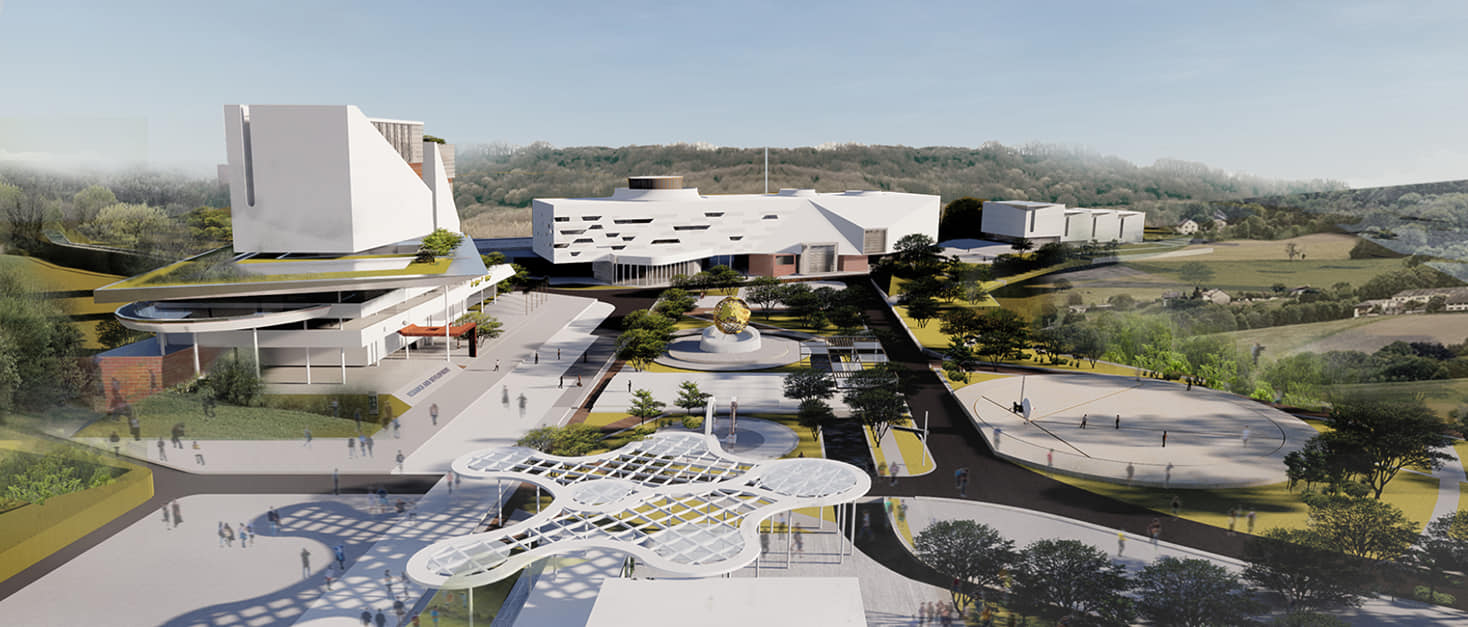
In 2020, Chief Minister Pinarayi Vijayan announced the development of Thiruvananthapuram as India’s ‘space city’, reviving the dream of a space-centered industrial hub. The proposed space park, dubbed ‘K-Space,’ aims to host companies and start-ups serving the national space program.
The project aims to become India’s first state-of-the-art facility dedicated to space-related technologies, research, and development. It seeks to attract global startups and stakeholders, offering a platform to engage with the Indian space tech ecosystem.
The park plans to house a startup incubator, accelerators, and skill-training systems, capitalizing on Thiruvananthapuram’s existing infrastructure, which includes several key space centres.
“KSPACE will extensively collaborate with KUSM, which has a proven track record of success in promoting start-ups. We will establish incubation and start-up facilities within the Common Facility Centre and R&D Centre under construction for KSPACE”, says G Levin, Chief Executive Officer, Kerala Space Park.
“Additionally, we will collaborate with R&D institutions and universities to support research ideas and their transition to product development and production”.
After a period of dormancy, the project regained momentum in 2022. While land acquisition and preliminary works are underway, the ambitious project signifies a step towards fulfilling the long-held space aspirations of the state.
The park is structured around three main verticals: the Nano Space Park focusing on hardware-centric assembly for SMBs and startups, the Space Technology Application Development Ecosystem (STADE) targeting application development in sectors like the downstream market, and a third vertical aiming at attracting major players in the sector to set up manufacturing facilities in Kerala.
Cities such as Dnipro in Ukraine and Huntsville in Alabama, USA, have established themselves as crucial nodes in the global space industry. Thiruvananthapuram, with its rich history in the space sector and existing infrastructure, can emulate them.
However, the journey from a historical launch site to a dynamic space city demands strategic planning, investment, and fostering an ecosystem conducive to technological and industrial growth in the space sector.
The Role of Start-ups and Academia
The growing space industry offers fertile ground for start-ups and academic institutions. There’s an increasing need for innovative solutions and cutting-edge research with the Indian Space Program’s evolution.
The Kerala Space Park aims to bridge this gap, providing a platform for start-ups to collaborate, innovate, and contribute to the space sector.
The Kerala Space Park includes a Funds of Funds provision for funding startups, with the potential for venture capital investment. It employs a multi-layered support system, offering critical infrastructure support, facilities for data computation, analysis, and mentorship from experienced professionals in the sector.
“We need the cooperation of all universities and institutes that are performing well, as we have already done with Kerala University, the Digital University, the Kerala Technological University, IIST, and the ISRO units. By working together, we can achieve success and benefit society”, adds G Levin.
Significant partnerships have been established to bolster the park’s ecosystem, including ties with ISRO, CNES (the French Space Agency), and Airbus’ Bizz Lab. These collaborations are essential for providing global access and opportunities for companies in the space sector.
The involvement of academic institutions such as the Indian Institute of Space Science and Technology (IIST) ensures a continuous flow of skilled professionals and innovative research, vital for the sustained growth of the space park.
“Thiruvananthapuram stands out as an ideal location for fostering a space ecosystem in India. However, there is a growing need for effective collaboration between these national institutions and the state’s top educational establishments”, says Prof Girish Kumar, Director, Centre for Latin American Studies, University of Kerala
Thiruvananthapuram’s journey in the space industry has been a tale of ambition, setbacks, and revival. While the initial plans did not materialize as envisioned, the current efforts to establish a space park opened up a new chapter.
The Kerala Space Park has the potential to revive the state’s industrial landscape, positioning Thiruvananthapuram as a key node in the global space economy.