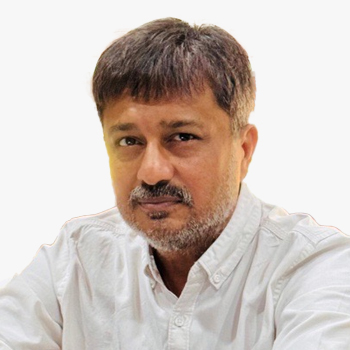


Oaishik Bhattacharya
Associate Director - GKI
Geospatial World
Oaishik Bhattacharya is the Associate Director for Geospatial Knowledge Infrastructure (GKI) at Geospatial World, working on policy advisory and strategic consulting projects for governments and multilaterals worldwide. He has contributed to Geospatial World's flagship project, the GKI Readiness Index 2025, as well as several strategic consulting assignments. His work focuses on advancing open-data ecosystems, strengthening geospatial capacity across South Asia and driving inclusive, technology-enabled sectoral transformation. He has previously worked with UNICEF, the Government of Telangana, and The Indian Express, bringing experience that bridges data-driven storytelling and policy consulting.

Dr. Greg Scott
Executive Director - SDG Data Alliance
PVBLIC Foundation
Australia
Greg Scott is the Executive Director of the SDG Data Alliance in PVBLIC Foundation and is leading the expansion of the Alliance into a new phase for developing countries, including increased engagement with SIDS through the establishment of the SIDS Global Data Hub and strategic support from Esri.
Greg previously spent 12 years in the United Nations as the strategic advisor and Secretariat lead in the establishment and development of the United Nations Committee of Experts on Global Geospatial Information Management (UN-GGIM) in New York.
Prior to joining the United Nations, Greg spent 25 years in Geoscience Australia delivering Australia�s national mapping and geospatial programs. He has a Graduate Diploma in Geography from the Australian National University, and PhD in Geomatics Engineering from the University of Melbourne.
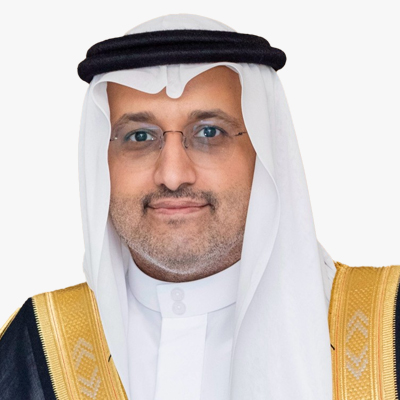
*Asim AlGhamdi
Asisstant Vice President
General Authority for Survey and Geospatial Information
Session Highlight
- Introduction to Geospatial Knowledge Infrastructure Principles and Concepts
- Significance of GKI for the Middle East
- Evolving Roles of National Geospatial Agencies (NGAs) in the Digital Age
- Middle East Preparedness and maturity: Insights from GKI Readiness Index 2025
- Navigating Challenges and Unlocking Opportunities for GKI in the Middle East
- Strategic Roadmap of GKI for National Development in Middle East Region
Oaishik Bhattacharya
Associate Director - GKI
Geospatial World
Oaishik Bhattacharya is the Associate Director for Geospatial Knowledge Infrastructure (GKI) at Geospatial World, working on policy advisory and strategic consulting projects for governments and multilaterals worldwide. He has contributed to Geospatial World's flagship project, the GKI Readiness Index 2025, as well as several strategic consulting assignments. His work focuses on advancing open-data ecosystems, strengthening geospatial capacity across South Asia and driving inclusive, technology-enabled sectoral transformation. He has previously worked with UNICEF, the Government of Telangana, and The Indian Express, bringing experience that bridges data-driven storytelling and policy consulting.
Session Highlight
- The Role of GKI in Tackling Middle East Priorities (Sustainable Urban Development, Energy Transition and Resource Mapping, Climate Resilience and Water Security)
- Theories and Frameworks for Collaborative Geospatial Workflows in the region
- Leveraging Massive Geospatial Data for Knowledge Creation
- Integrating Digital Twins into GKI for Real-Time Decision Making (Supporting smart city, infrastructure, and energy projects)
- Cutting-edge tools/technologies driving regional innovation and development
- Case Study: Successful GKI Implementation and Collaborative Models

Ahmed El Awady
Regional Business Development Manager | Principal Consultant
Esri
Ahmed Awady serves as a Regional Business Development Manager and Principal Consultant at Esri, leading engagements across the space and earth observation sectors in the Middle East, Africa, and West Asia.
With over 15 years of experience in geospatial data management, analytics, and AI-driven solutions, Ahmed has been instrumental in advancing the use of imagery and GeoAI across national mapping, defense, environmental, and space programs. His expertise spans satellite data integration, AI-powered analytics, and enterprise geospatial enablement-helping governments and organizations derive actionable intelligence from imagery and location data.
Earlier in his career, Ahmed was part of Esri's core development team, serving as a technical lead on ArcGIS Desktop technologies (ArcGIS Pro, ArcMap) and contributing to the globalization of Esri software. He played a key role in delivering the first Arabic release of ArcMap in 2011.
Today, Ahmed focuses on empowering the regional space ecosystem and fostering innovation through Earth observation, AI, and advanced geospatial analytics to support sustainable growth and strategic decision-making.
Session Highlight
Session Highlight
- Designing Strategic Spatial Infrastructure for national geospatial ecosystems
- Advanced Spatial Data Management for cross-sector integration
- Leveraging Geospatial Technologies for regional development
- Future Geospatial Industry Ecosystem for innovation and economic growth
- Capacity Building and Skill Development for sustainable GKI growth
- Case Study- GEOSA-SLA Collaboration: Strengthening National Geospatial Infrastructure

Prof. Dr. Zaffar Sadiq Mohamed-Ghouse
Vice President and Director, Advisory and Innovation
Woolpert
Australia
Prof. Dr Zaffar Sadiq Mohamed-Ghouse is an engineer and scientist, recognised as one of the global leaders in the Spatial and Space sector. Zaffar has held senior and executive roles in the Private Sector, government, and research sectors. He has over 25 years of experience, developing strategic plan for positioning networks including products; client management, strategic consulting studies, business development, project management, systems review and integration for the Utility Industry and Government, design, development and management of spatial databases, review data framework policies, develop spatial analyses techniques and technology including GIS applications development for major clients across the globe. Zaffar is also the Chair of the UN-GGIM Geospatial Societies and Former Chair of UN-GGIM Private Sector Network. He also serves as Vice Chair of the OGC Board of Directors. He has held senior and executive roles in the Government, Research and Private sectors. He has experience working for major clients in Australia, New Zealand, Malaysia, Indonesia, India, the United Arab Emirates and Saudi Arabia. He has led several Multi-Million Dollar National Mapping projects for State and Federal governments globally. Zaffar has published extensively in GIS, Surveying, Remote Sensing, Data Management and SDIs. He is also the Chair of the World Geospatial Industry Council for Policy Committee and UN-related entities and the Former President of the Surveying Spatial Sciences Institute (SSSI), Australia. He holds an appointment as the Senior Advisor to the Smartsat CRC, an Australian Government initiative in the Space Sector. He is one of the founder members of the Geospatial Knowledge Infrastructure and is an expert and advocate for Geospatial Ecosystems beyond SDIs. He was recognised for his 15-year contribution to ISO TC 211 Standards for Geospatial and Geomatics by Standards Australia. He has held and holds academic appointments in India, Australia and Malaysia.
Zaffar is a recipient of: National Geospatial Professional Fellow (Overseas Citizen of India) 2025, IIT Bombay, India for International Leadership; The ISDE Service Award 2025, conferred by the International Society for Digital Earth for International Leadership and promoting digital earth; Peter Woodgate, Special Award 2025 for leadership, mentoring and innovation; the Club Melbourne Ambassador Award, 2024 by Victorian Convention Bureau; "Thornton-Smith Medal" awarded by the Department of Infrastructure Engineering, University of Melbourne, Australia, for significant contribution to the surveying and spatial industry; "Professional of the Year 2022" APSEA- Oceania and APSEA-Victoria Recipient; Young Professional Award APSEA-Victoria, conferred by Geospatial Council of Australia formerly SSSI in 2011; He is also a recipient of the Australian Cooperative Research Centre for Spatial Information's full Doctorate Scholarship. He is an Honorary Fellow of the Geospatial Council of Australia, a Fellow of the Royal Geographical Society, UK and a Fellow of the Institution of Engineers, Australia and elected as a Senior Member of IEEE.
Session Highlight
- Leveraging GKI for Oil and Gas Infrastructure Planning
- Digital Twins for Real-Time Energy and Construction Insights
- Integrating BIM with GKI for Cross-Sector Project Management
- Geospatial Analysis for Sustainability in Energy and AEC Projects
- Asset Monitoring and Lifecycle Management using GKI
- Collaborative Geospatial Workflows for Large-Scale Energy Developments
- Case Studies: GKI Applications in Middle East Energy and Urban Projects

Mohammad Shamlouli
Principal Planning Data
Dubai Municipality
Session Highlight