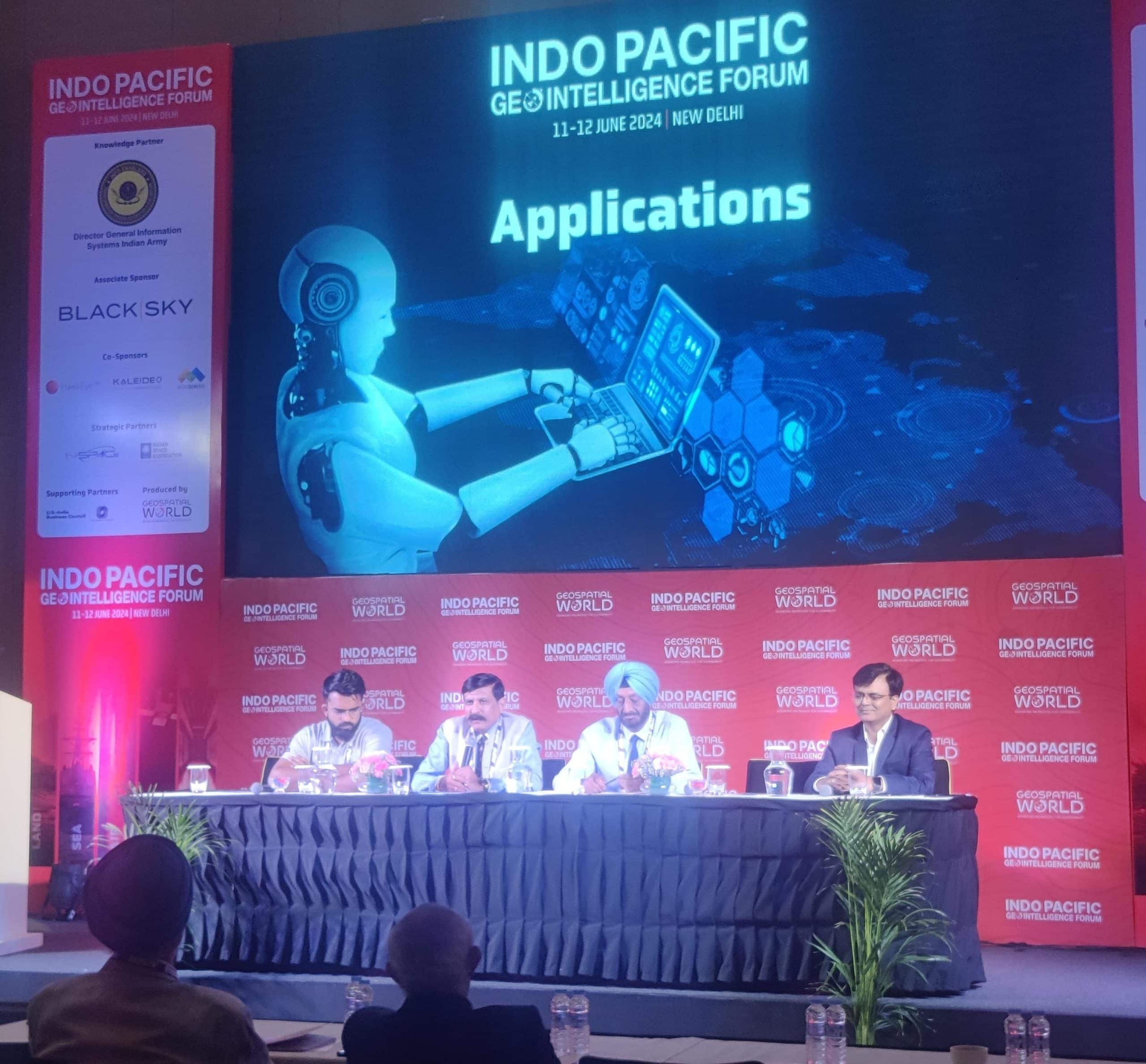
In the changing landscape of modern warfare, the integration of human intelligence with machine capabilities is proving to be path-breaking. Human Machine Teaming is at the front of this transformation.
Quoting John Pfeifer, “Man is sloppy and brilliant in thinking, Machine is accurate but stupid.” Lt. Gen Sanjay Verma, Consultant, DRDO chaired the opening panel on Human-Machine Teaming for Secure & Real-time Satellite Sensor to Shooter Links on the 2nd day of IPGF2024.
HMT Enabling Transition in Man-Machine Symbiosis
Traditionally, the notion was that humans had to adapt to machines. However, recent technological advancements have overturned this notion. It is now increasingly evident that we are adapting to our machines more than ever before.
Lt Gen Sanjay Verma emphasized on this Human- Machine interconnectedness saying, “In the evolving relationship between humans and machines, the question of who adapts to whom has shifted. Recent technological leaps have made it clear that we are now adapting to our machines more than ever before.”
Some key components of HMT include data fusion and analysis including automated alerts and notifications where the machines excel at processing enormous data quickly, while humans provide context, intuition, and the ability to discern undetectable patterns that algorithms might miss.
Another key enabler is predictive modelling, which is basically using historical data to forecast future events. Machines generate predictive models, while humans interpret the results and apply their domain expertise to refine the models.
Brigadier A S Nagra here sheds more light on Human Machine Interface Teaming saying, “It’s more than just humans using technology; it’s about creating partnerships where each entity complements and enhances the other’s capabilities.”
He further adds, “HMT optimizes the flow of information. Secondly, it speeds up decision cycles and empowers operators in the battlefield to respond effectively.”
Other major components include collaborative decision-making, reduced cognitive load i.e. reducing the mental effort required for humans to complete tasks and having a secure communication by boosting cybersecurity measures.
India’s HMT Advantage
The integration of the legged squads support system which (functions the way a mount works and can carry squad equipment, which has a sense and negotiate terrain, can maneuver nimbly, and operate quietly)and unmanned UAVs like DRDO Rustom with HMT is further amplifying the impact of this technology. These autonomous systems are not just tools and can extend the reach and capabilities of human operators.
By deploying autonomous systems in high-risk environments, HMT can significantly reduce the risk to human life.
“Integrating HMT into India’s Defence sector offers significant potential to enhance operational capabilities and strategic advantages. By building a skilled workforce, increasing R&D investment, ensuring interoperability and addressing ethical and security concerns, India can effectively leverage HMT,” says Saurabh Rai, CEO of Arahas Technology.
He further adds, “This synergy of AI and autonomous systems alongside human decision-makers, analysts, operators, and watchkeepers combines the strengths of both humans and machines, resulting in a powerful force multiplier.”
The enhanced situational awareness and decision-making capabilities provided by HMT enable commanders to take calculated risks that were previously deemed too dangerous. The key to success lies in striking the right balance between human cleverness and the precision of machines.