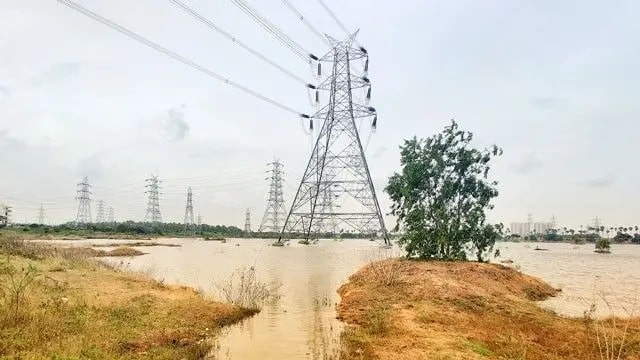
The ‘Power for All’ programme was the Government of India’s commitment to improving the quality of life of its citizens through higher electricity consumption. A collaborative effort between the Government of India and state governments, the system is used in this case in Uttar Pradesh and Bihar.
Its primary aim was to ensure uninterrupted power supply to households, industries, commercial establishments, and other consumers while also providing sufficient power to support agricultural needs.
Project Challenges
- Identifying power demand at 15-minute time intervals.
- Identifying the cause of power usage deviations.
- The digitalisation of power prediction-related calculations.
- Rectifying financial losses due to miscalculation of power requirements.
- Accurately predicting power consumption to avoid energy wastage.
- A narrowed frequency for energy transport from 49.9 Hz to 50.05 Hz dictated the necessity of accurate power predictions.
Technology Used
Mercados jouleOS & IBM Environmental Intelligence Suite
Solutions
- Weather conditions were a crucial factor influencing power consumption and power usage prediction became accurate with its incorporation in the prediction model.
- Mercados EMI created an AI-based demand forecasting solution called jouleOS, utilizing Environmental Data Services from The Weather Company, an IBM Business.
- Artificial intelligence-powered prediction of power usage was employed.
- The prediction model first analysed demand by using the state’s historical demand data with historical weather pattern data obtained from The Weather Company’s History on Demand data package.
- Utilized the Weather Company’s Enhanced Forecast data and the IBM Environmental Intelligence Suite to achieve the desired data resolution.
This allowed for more accurate forecasting, down to 15-minute intervals and within a geographic radius of 500 x 500 meters, a significant improvement over the previous three-hour weather data available from an open-source database.
(This case study is available in the Geospatial World Resource Platform)