Koraput, the third largest district in Odisha provides habitat to tribal communities which constitute more than 50% of its population.
83% of the Koraput’s population lives are supported by indigenous agriculture, which has placed Koraput Valley on the UN map with the prestigious GIAHS award. Indigenous knowledge and farming practices of the region’s tribal people are recognised for promoting food security and conserving biodiversity.
The Food and Agriculture Organisation (FAO) of the United Nations has accorded the status of Globally Important Agricultural Heritage System (GIAHS) to the traditional agricultural system being practiced in the Koraput region of Odisha.
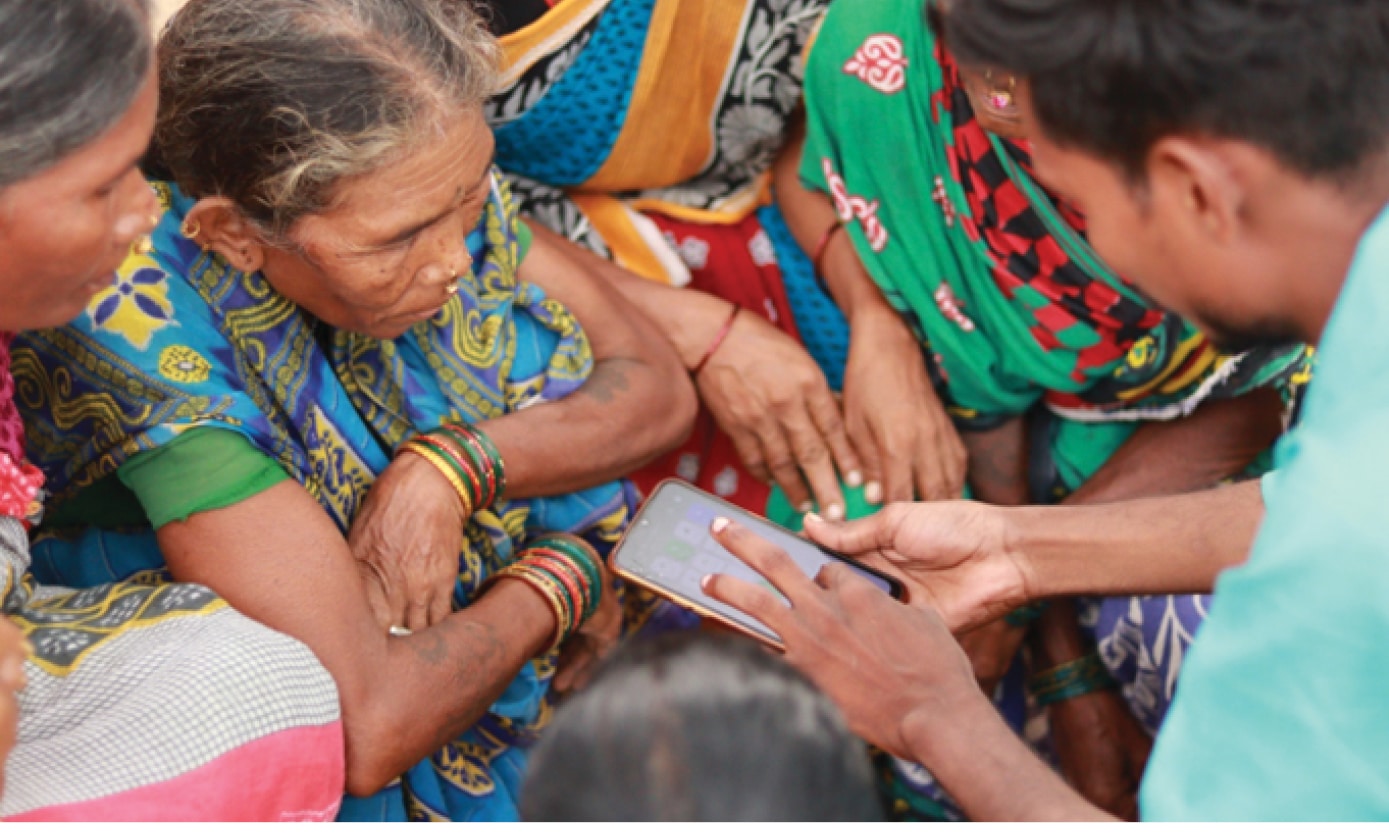
Under the guidance of TRIFED, CYSD launched a mobile application, Banashree which is an educational app for the rural tribal for entering their daily collection data of natural resources. This app will also help them learn new concepts and theories of forest produce and its marketability.
Banashree App helps tribal communities digitalize the buying and selling of non-timber forest produce. They use satellite imagery by ORSAC to map the communities that reside deep in the forest and reach out to them to spread awareness and educate them. The app, they have provided an equal playing field for the tribal communities to sell their produce and become financially independent. Their work also comprises providing the tribal communities with training and using digital payment applications.
“Banashree is conceptualized to let the tribal women ride the wave of digital boon and leverage the combination of geospatial and digital technology for their economic well-being. The tribal women have been enabled to know the potential of their NTFP harvest, and subsequently they are able to bargain the price for their harvest collectively,” states Ashish Jalli Banasree, Sr. Program Manager, Centre for Youth and Social Development.
The Ministry of Tribal Affairs has developed an androidbased mobile application called Tribal Diaries for internal monitoring and also connecting with officers/officials concerned with the implementation of schemes/ programs for tribal development. The application is for accredited users. This application provides an opportunity for visual feedback in terms of photographs, and videos, uploading reports of official tours/inspections, and sharing of best practices, etc.

Volunteers Taking Lead
Community Resource Persons (CRPs) work under the LIC-HFL project in which they have been assigned to ensure zero-interest loans to the tribal women who are active members of the self-help group (SHG) for Poultry farming for 3 months.
They are involved in Banashree (Van Dhan Yojana) to encouraging and create awareness towards the importance of NTFP products to the marginal and landless farmers.
They provide the basic information about the minimum support price (MSP) of non-timber forest products (NTFPs) to the beneficiaries so that they can get the actual cost for their products, eliminating the middlemen from exploiting them.
“We select young women from the community and train them as Digital champions to assist the NTFP gatherers in accessing digital resources and use the Banashree App for NTFP marketing. Those Digital Champions are the ones, who have ensured sustainability of the program,” adds Jalli.
Most importantly they are helping the farmers to get links in Banashree application through the Android mobile for easy selling of their collected products to the wider customers or traders.

Impact of Digitalisation
Under the non-timber forest produce category that the tribal communities in Odisha sell are tamarind, deseeded tamarind, tamarind seeds, Sal seeds, Sal leaves, gums and resins, tendu leaves, and mahua flowers among others.
Earlier the tamarind tree was sold at INR 1500-2000 at the flowering stage and after the tree bears the fruit, the average yield would come around 100kgs. The seeded tamarind was sold at INR 10 per kg with an additional labour charge of INR 6 per hour. Later, when it was sold at the market, the price was as high as INR 70 per kg.
Now that the selling price has been fixed by the government, which is INR 36, so the tree gets sold at INR 3600, which is 80% additional profit from the tree.
The selling price of the tree depends on the flowering quantity of the tree. Sal seed is being sold through collective marketing and last year 626 quintals of Sal seed were sold by 380 women at INR 20 per Kg they are selling maize, at MSP of INR 20.90 per Kg, which was earlier either bartered for basic needs like oil, and clothes at the local market or sold at INR 5 per kg.
Until now the Banashree app is being used by more than 7000 registered primary gatherers from Koraput, which are being trained by the CRPs.
Now the tribal communities have sold a total of 1224 quintals to TDCC (Tribal Development Cooperative Corporation of Odisha Limited) Koraput across all the blocks. They harvest Tamarind in the month of April to May first week. The TDCC procured tamarind at the end of May 2023.