














Overview
The Geospatial World Forum 2026 will feature a 90-minute technology program on GeoAI, highlighting its transformative impact across industries like AEC (Architecture, Engineering, and Construction), Geospatial Knowledge Infrastructure, Utilities & Network, Defence & Intelligence, Capacity Development, Space2Earth, Climate Resilience and Disaster Management, Hydrospatial Infrastructure and Blue Economy, Agriculture, Land & Property.
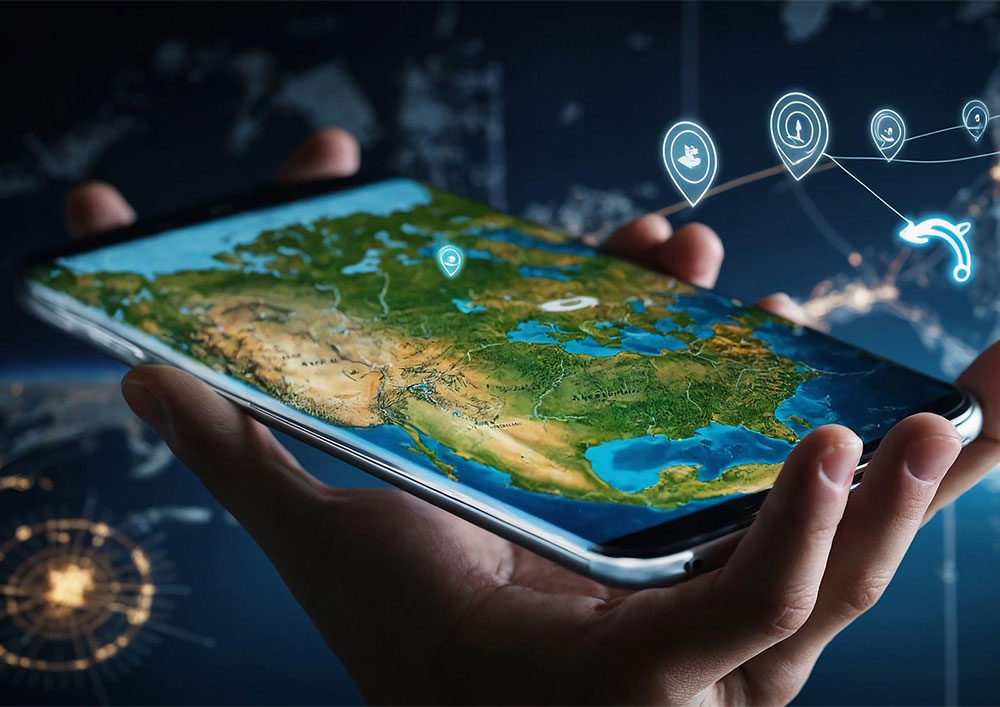
GeoAI is the fusion of geospatial technologies and artificial intelligence that is transforming how we analyze, predict, and manage our world. By combining satellite imagery, sensor data, and spatial analytics with machine learning, GeoAI enables automated mapping, change detection, and predictive modeling at unprecedented speed and scale. In the geospatial sector, it advances urban growth analysis, infrastructure monitoring, and environmental assessment, while in the space domain, it enhances satellite image interpretation, orbital analytics, and planetary exploration. GeoAI’s applications span smart cities, agriculture, climate resilience, transportation, defense, energy, and environmental conservation, providing actionable intelligence for sustainable development. Despite its promise, challenges such as data quality, algorithm bias, transparency, and data privacy remain.
At GWF 2026, this track will highlight emerging opportunities from edge AI and cloud-based analytics to integration with digital twins and spatial computing and showcasing how GeoAI is driving faster, smarter, and more sustainable spatial intelligence across Earth and beyond.