Overview
Agriculture remains a cornerstone of India's economy, supporting livelihoods, food security and a vast network of allied industries, including agricultural inputs, irrigation, finance, storage, processing and markets. With agriculture and allied sectors contributing an estimated ₹52.08 lakh crore in Gross Value Added (GVA) in 2025–26, improving productivity, resource efficiency, climate resilience and farmer incomes remains a national priority.
India is undergoing a significant transformation in how agricultural information is collected, integrated and used. The Digital Agriculture Mission and AgriStack are establishing a digital foundation connecting farmers, land records and crop information. As of August 2026, more than 10.31 crore Farmer IDs had been generated, while the Digital Crop Survey covered over 31.3 crore plots across 648 districts during Rabi 2025–26. Initiatives such as Krishi Decision Support System (Krishi-DSS), Bharat-VISTAAR, the National Pest Surveillance System and Namo Drone Didi are further expanding the use of digital technologies, AI and location-specific intelligence in agricultural planning and service delivery.
The next challenge is to translate this growing digital infrastructure into actionable intelligence and measurable economic value. Farmers need timely information to manage crops, water, inputs and climate risks. Governments require reliable data for agricultural planning, crop assessment and delivery of services. Financial institutions and insurers need better visibility into production and risk, while agribusinesses depend on accurate crop forecasts, efficient procurement, storage and market connectivity.
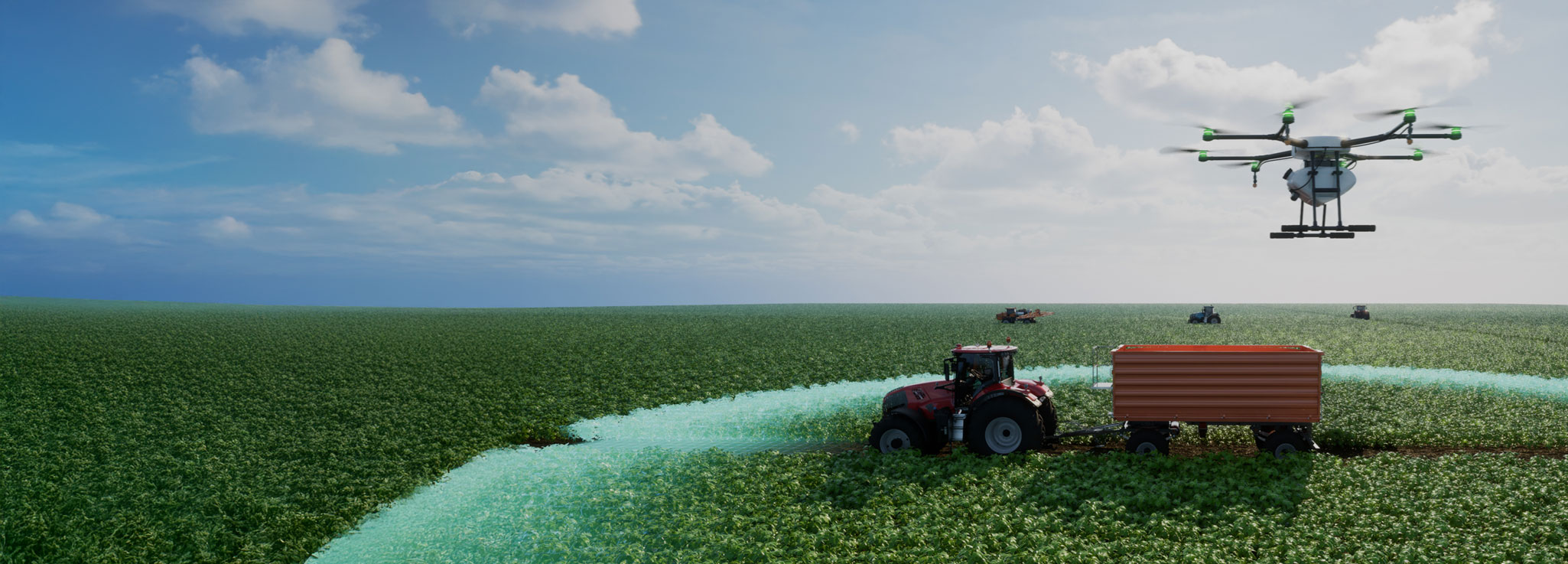
Space, geospatial and emerging technologies have a critical role in enabling this transformation. Earth observation and satellite intelligence support crop monitoring, acreage and yield estimation, soil-moisture assessment and early detection of agricultural risks. GIS integrates information on land, crops, soil, water and weather; drones, sensors and precision technologies enable more efficient farm operations; and AI and GeoAI convert complex datasets into forecasts, alerts and decision-support services. Together, these capabilities can help India move from agricultural monitoring to prediction, informed decisions and timely action—across farms, landscapes and value chains.
The Agriculture Seminar at GeoSmart India 2026 will bring together government leaders, agricultural institutions, space and geospatial technology companies, agribusinesses, financial institutions and farmer organisations to explore how these capabilities can be deployed and scaled. The seminar will focus on strengthening India's agricultural economy through smarter production, sustainable resource management, reduced risk and losses, improved market access and greater value creation for farmers.
Read More